Glycolysis: The Carb Turbo
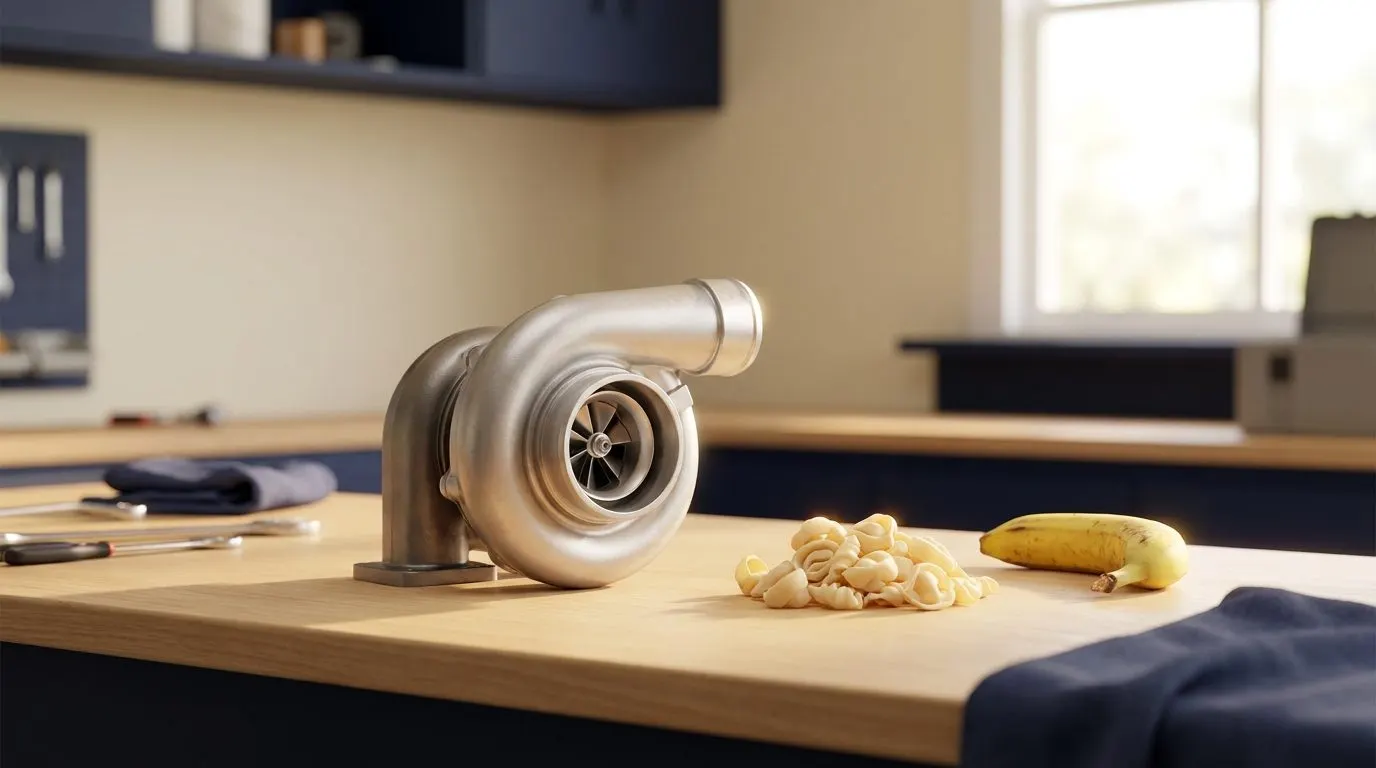
So you’ve burned through your battery and your quick-charger. It’s been about 10 seconds of all-out effort and you’re still going. What now?
Enter the turbo.
Your body switches to burning carbohydrate — sugar stored in your muscles — to crank out ATP fast, without waiting for oxygen to show up. This is glycolysis, and it’s the engine behind everything in that miserable, beautiful middle zone.
Think of it as the turbocharger on a car. It produces a ton of power in a hurry, but you can’t leave it floored forever.
The 30-second-to-two-minute engine
This is the system that runs the stuff that genuinely hurts:
- A hard set of 10 to 15 reps.
- A 400-meter run.
- A HIIT interval that makes you question your life choices.
Roughly 30 seconds to two minutes of high effort lives here. Long enough to burn, short enough that you can’t hold a conversation. That’s the turbo zone.
And it runs on carbs. This is the whole reason carbohydrate fuels intensity — when you want to go hard, your body reaches for sugar, because sugar is the only fuel it can burn fast enough without oxygen. Train hard and skimp on carbs, and you’ll feel the turbo wheeze.
About that “burn”
Now let’s bust a myth that has survived for decades.
You’ve heard that the burning feeling in a hard set is “lactic acid” building up and poisoning your muscles. It’s such a tidy story. It’s also wrong.
The burn isn’t a villain. It’s just by-products — the natural exhaust of running the turbo hard and fast. Your body is producing ATP at full tilt, and the leftovers pile up faster than they can be cleared. That stinging, can’t-do-one-more feeling is the signal that you’re working in exactly the zone this engine was built for.
Lactate, the molecule everyone loves to blame, isn’t even waste. Your body actually recycles it back into fuel. It’s less “toxic sludge” and more “spare change your muscles pick up off the floor and reuse.”
So next time a set burns, don’t curse it. That’s the turbo working. The burn is the point.
The takeaway: glycolysis is your carbohydrate turbo — it powers 30 seconds to two minutes of hard effort, and the burn is just by-products, not a ‘lactic acid’ villain.
But you can’t live in the turbo zone all day. For the long, steady stuff, you need a completely different engine — the diesel. That’s next.
BTZ Academy lessons are educational, not medical advice. Talk to your physician before changing medication, supplements, or training.