Track It Like a Scientist, Not a Judge
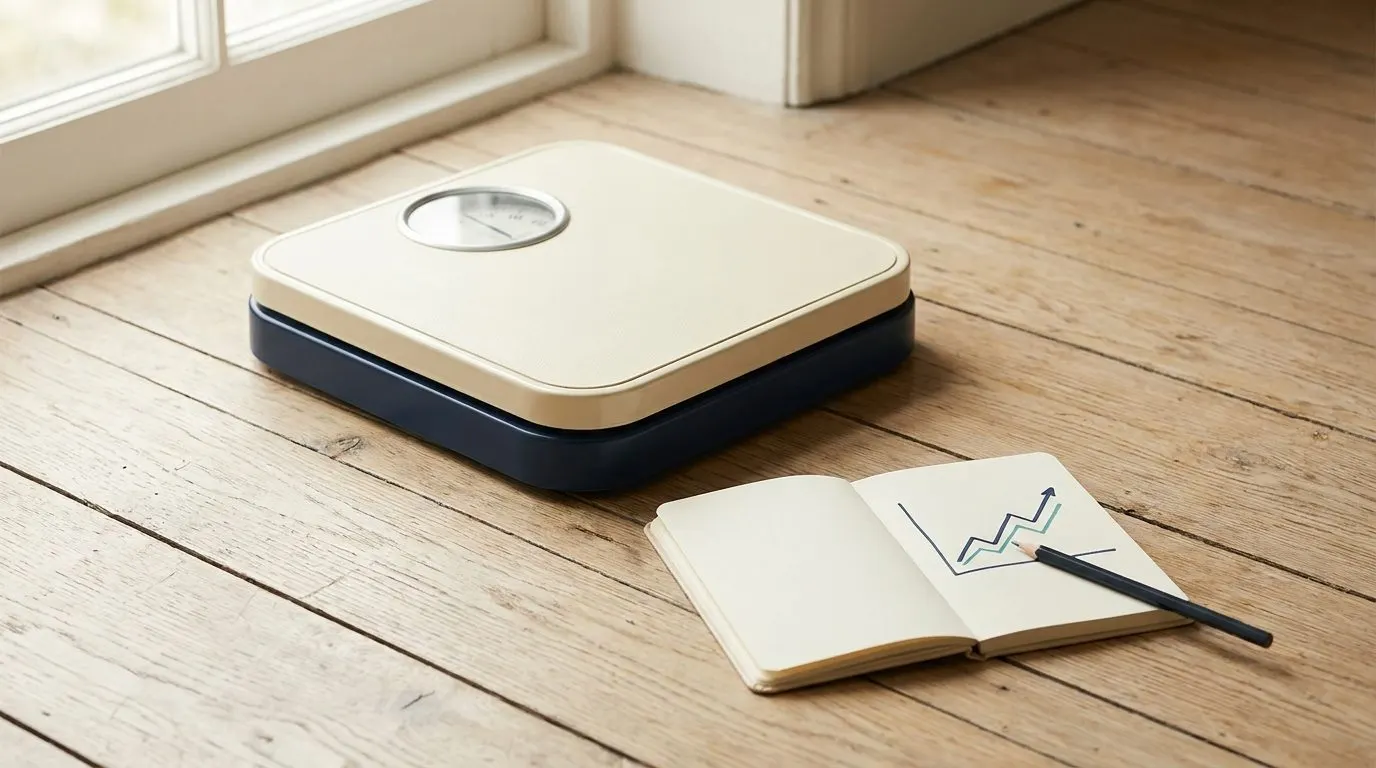
Your weight this morning was a lie. So was yesterday’s.
Daily weight bounces around with water, salt, carbs, last night’s dinner, and the general mood of the universe — easily a kilo or two of noise that has nothing to do with fat. Step on the scale after a sushi night and you’ll “gain” weight overnight at a speed that is physically impossible as fat.
That doesn’t make the scale useless. It makes single weigh-ins useless. The trend is the signal; the daily number is static.
Track like a scientist
- The scale. Same time, same conditions, then judge the weekly average — never the single day. In weight-loss studies, people who weigh daily tend to do better than people who weigh rarely, probably because the feedback loop stays tight. But it only works if each number is a data point, not a verdict.
- Photos. Once a month, same spot, same light. The mirror lies to you daily; photos taken eight weeks apart don’t.
- The training log. Are you lifting a bit more, or doing one rep extra, compared with last month? That number only moves for good reasons, which makes it the most honest scoreboard you own.
When tracking turns toxic
Tracking is a tool, and like any tool, you can hit your own thumb with it. Warning signs: a number decides your mood for the whole day; you re-weigh three times hoping for a better answer; dinner starts feeling like math homework. If that’s you, zoom out — weekly weigh-ins, or photos only. Data exists to inform decisions. The moment it starts grading your worth as a human, it’s fired.
And about streaks: forget the 200-day chain. Chains break, and a broken chain has talked more people into quitting than any cookie ever did. The only streak that matters is the one from lesson three — never miss twice. Miss a day, shrug, show up tomorrow. That streak is unbreakable by design.
That’s the whole Habits track: the loop, building, breaking, the keystones, the cliff, the kitchen, the scoreboard. Your autopilot will run for the next forty years either way — now you know how to program it.
The takeaway: Watch trends, not days — and the only streak worth protecting is “never miss twice.”
Want more? The Nutrition track explains what a calorie actually is, the Exercise track sorts strength from cardio without the confusion, and the Supplements track tells you what’s worth your money. Pick a door.
BTZ Academy lessons are educational, not medical advice. Talk to your physician before changing medication, supplements, or training.