Menopause and Sleep
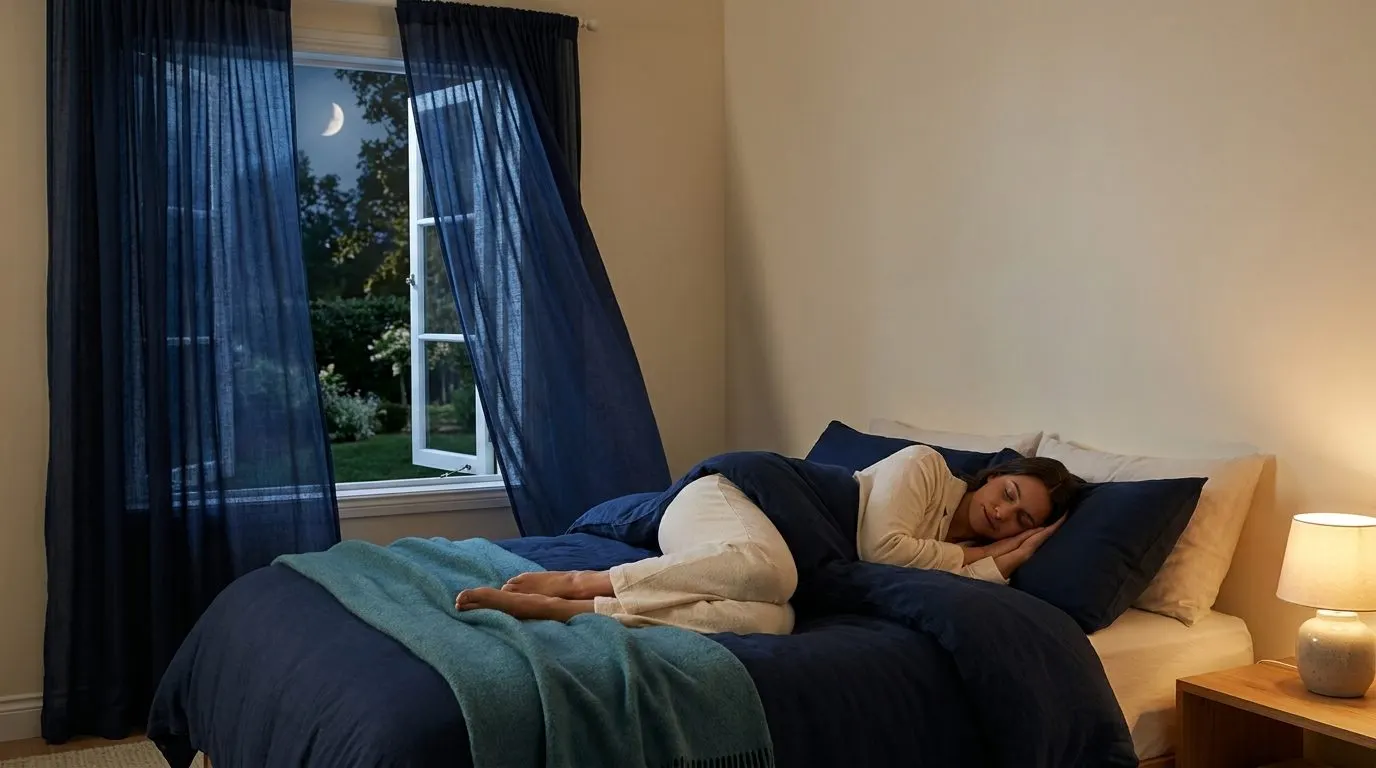
Everything we’ve covered — hunger hormones, the cortisol-and-repair orchestra, the diet that eats your muscle — lands hardest on women in perimenopause and menopause. If you feel like the rules suddenly changed this season, you’re not imagining it. They did.
Why it hits harder here
As estrogen and progesterone decline through the menopause transition, sleep takes a direct hit. These hormones helped keep sleep deep and steady; as they fall, nights get lighter and broken.
Then add hot flashes and night sweats, which have a cruel habit of arriving at 3 a.m. — yanking you out of the very deep sleep that does the repairing. You wake more, sleep shallower, and get less of the good stuff exactly when you need it most.
Now stack that on the loop from the earlier lessons. Broken sleep cranks hunger, tips hormones the wrong way, and steers a diet toward losing muscle instead of fat. So the classic midlife frustration — “I’m eating the same, training the same, and gaining weight” — often isn’t a willpower problem at all. It’s a sleep problem feeding a hunger problem feeding a weight problem. A genuine vicious circle: worse sleep nudges weight up, and extra weight makes sleep worse still.
The good news: you can break into that loop at the sleep step.
Practical levers
None of these are magic, but together they move the needle:
- A cool, dark room. Hot flashes hate a cold bedroom. Drop the temperature, use breathable bedding, keep a fan handy. This is the single biggest lever for flash-driven waking.
- A steady schedule. Same bedtime, same wake time, even on weekends — a predictable rhythm helps a confused system find its footing.
- Strength training. Lifting protects the muscle this season tends to strip, supports your metabolism, and often improves sleep quality on top of it.
- Mind the evening inputs. Late caffeine, alcohol and heavy meals all sabotage already-fragile sleep. Alcohol especially feels like it helps and then fractures the back half of your night.
And one more, which sits firmly above this lesson’s pay grade: hormone replacement therapy (HRT). For some women it meaningfully helps with hot flashes and sleep; for others it isn’t the right fit. That is a genuine medical decision for you and your doctor, based on your history and your risks — not something to start or skip on the advice of a microlesson. If symptoms are wrecking your quality of life, that’s your cue to raise it with your physician.
You are not failing. The season is genuinely harder, the biology really did change, and the levers above are real tools.
The takeaway: menopause hammers sleep through falling hormones and hot flashes, feeding a sleep-hunger-weight loop — but a cool room, a steady schedule, strength training, and an HRT conversation with your doctor are real levers.
That closes the Sleep track. You’ve now got all three pillars — train it, feed it, and let it switch off to rebuild. The engine is complete.
BTZ Academy lessons are educational, not medical advice. Talk to your physician before changing medication, supplements, or training.