Vitamin K: The Quiet One
Every vitamin family has a member nobody mentions at parties. For the fat-soluble crew, that’s vitamin K. It does unglamorous, essential work — and it has a split personality worth knowing.
The headline job is blood clotting. The “K” even comes from koagulation, the German spelling. Without enough vitamin K, a small cut wouldn’t stop bleeding properly. Quiet, but kind of important.
K1 versus K2
This is the part that makes vitamin K interesting, and it’s why it deserves its own lesson.
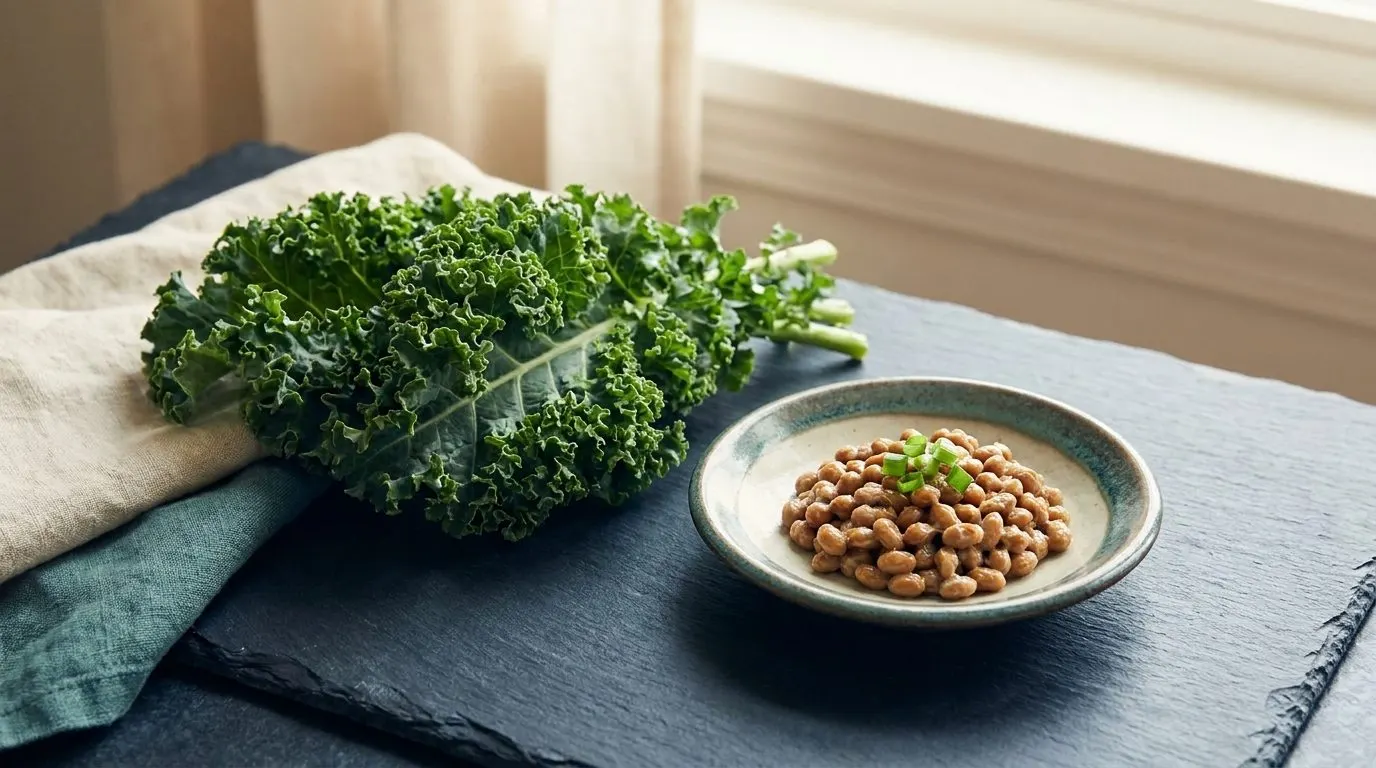
- K1 comes from leafy greens — kale, spinach, broccoli. It heads mostly to your liver and handles the clotting work.
- K2 comes from fermented and animal foods — natto (fermented soybeans), some cheeses, egg yolks, organ meats. It travels further, out to your bones and arteries.
K2’s trick is calcium traffic control. It helps switch on proteins that escort calcium into your bones and out of your arteries — exactly where you want it and don’t want it, respectively. Greens give you plenty of K1; K2 is the one most people eat less of, because fermented foods aren’t on every plate.
Do you need to worry about it?
Mostly, no — and that’s the honest answer to the usual question. A diet with regular greens covers the basics, and outright deficiency is uncommon in healthy adults who eat vegetables.
Two real-world notes, though. If you eat fermented foods or quality dairy now and then, you’re topping up K2 too — a nice bonus for your bones. And one genuine caution: if you take blood-thinning medication like warfarin, vitamin K directly affects how that drug works, so big swings in your greens intake matter. That’s a conversation for your doctor, not a reason to fear broccoli.
For everyone else, the move is gloriously simple: eat your greens, enjoy the occasional fermented food, and let the quiet vitamin do its quiet job.
The takeaway: vitamin K clots your blood and steers calcium to your bones — eat greens for K1, fermented and animal foods for K2, and don’t overthink it.
Next lesson: we open the B-complex with B1, thiamine — the spark that turns the carbs on your plate into actual energy.
BTZ Academy lessons are educational, not medical advice. Talk to your physician before changing medication, supplements, or training.