Electrolytes: The Hydration Team
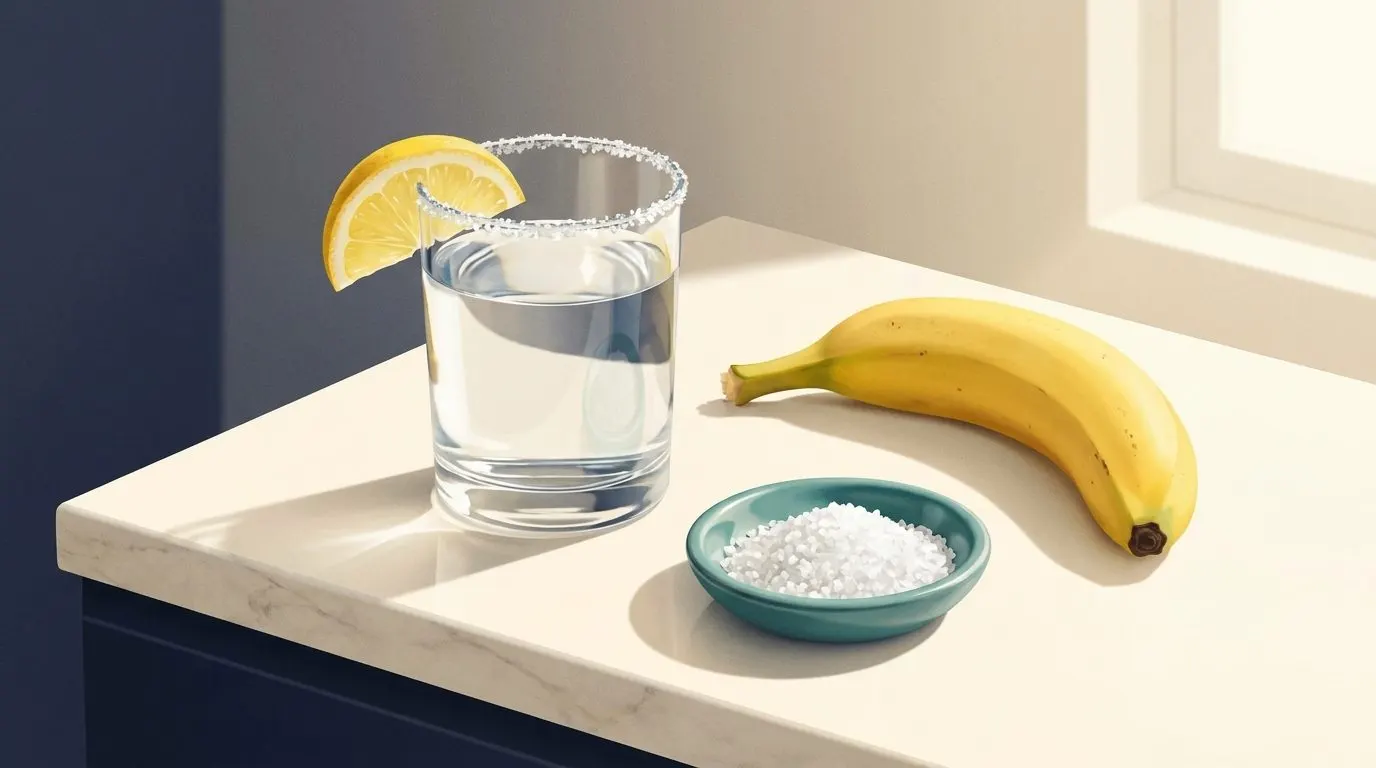
Electrolytes sound high-tech, but they’re just minerals that carry a tiny electrical charge when dissolved in your body’s water. The headline trio: sodium, potassium, and chloride. They work as a team, and that teamwork is what keeps you running.
Together they handle the electrical messaging that fires your nerves and contracts your muscles, they manage how much water your body holds onto, and they help set your blood pressure. When the balance is right, you don’t notice them at all. When it slips, you cramp, you feel foggy, you flag.
What each one does
- Sodium — the big one for hydration. It’s the mineral that helps your body actually hold the water you drink. You lose the most of it in sweat.
- Potassium — sodium’s counterweight. It helps relax blood vessels and keeps your heartbeat steady. Most people eat too little of it and too much sodium — the opposite of ideal.
- Chloride — the quiet partner that travels with sodium and keeps your fluid balance in line.
Quick myth-bust on cramps: people blame magnesium and potassium, but the most common culprit in a sweaty cramp is actually losing salt and water. Plain water alone won’t replace the salt — which is the whole reason electrolyte products exist.
Who actually needs electrolyte drinks
This is where the marketing gets out over its skis. Electrolyte powders are sold to everyone, but most people don’t need them.
You probably do benefit if you’re:
- Doing prolonged, sweaty exercise — long runs, hot-weather training, hours on the bike.
- Working long hours outdoors in heat.
- Sick with vomiting or diarrhea (this is the original, genuinely useful case).
- Training at altitude.
You probably don’t need them if you’re:
- At a desk all day with a water bottle.
- Doing a normal 45-minute gym session.
- Already eating real food — fruit, vegetables, a salted meal, a smoothie. That covers your electrolytes just fine.
For the desk-and-smoothie crowd, a fancy hydration sachet is mostly flavored water with a price tag. There’s nothing wrong with it, but you’re not “under-hydrated” without it.
One caution the other direction: don’t overdo the sodium drinks if you’re not sweating buckets. Loading up on electrolytes you didn’t lose isn’t a tonic — your kidneys just have to clear the excess, and too much sodium nudges blood pressure the wrong way.
The takeaway: electrolytes are a team that runs hydration and muscle function — but unless you’re sweating hard or sick, real food already covers you.
Next lesson: the grand finale — the entire vitamins and minerals track squeezed into one scannable cheat-sheet you can come back to anytime.
BTZ Academy lessons are educational, not medical advice. Talk to your physician before changing medication, supplements, or training.