Does Your Metabolism Really Slow Down After 40?

In 2021, a team led by Herman Pontzer published the largest metabolism dataset ever assembled: doubly labelled water measurements, the gold standard for energy expenditure, from over 6,400 people aged 8 days to 95 years (Pontzer et al., 2021, Science, PMID 34385400). The finding that startled everyone, including the researchers: adjusted for lean mass, metabolism is essentially stable from age 20 to age 60. No dip at 30. No cliff at 40. No change through menopause that the data could detect at the population level. The real decline starts around 60, at roughly 0.7% per year.
Which leaves an obvious question. If the furnace runs steady for four decades, why does almost everyone gain weight through their forties?
What actually changes after 40
The Pontzer data says total and resting expenditure, once you account for body composition, hold steady. The phrase doing the heavy lifting is “account for body composition.” Untrained adults lose muscle from their mid-thirties onward, commonly 3 to 8% per decade. Muscle is metabolically active tissue. Carry two kilograms less of it and your absolute daily burn drops, not because metabolism per kilogram changed, but because there are fewer kilograms doing the burning.
Movement falls further. The forties are peak sitting years: senior job, longer commutes, kids’ schedules, knees that file complaints. The spontaneous movement of a 25-year-old, walking to meet friends, standing at concerts, taking stairs without thinking, quietly disappears, and with it several hundred daily calories of non-exercise activity.
Then life adds calories from the other side. Sleep shortens, and short sleep reliably increases intake. Stress eating, restaurant frequency, wine on weeknights, portion drift. None of these is a furnace problem. All of them land on the same scale.
Hormones get the blame, and they do play a role, especially in where fat is stored; menopause shifts fat viscerally, and falling testosterone in men makes muscle harder to hold. But the energy-expenditure data is hard to argue with: the engine itself is not meaningfully slower at 45 than at 25. What changed is the size of the engine and how often it leaves the garage.
This is genuinely good news. A mysterious metabolic decline would be unfixable. Muscle and movement are trainable at any age.
The counterattack, ranked by effect
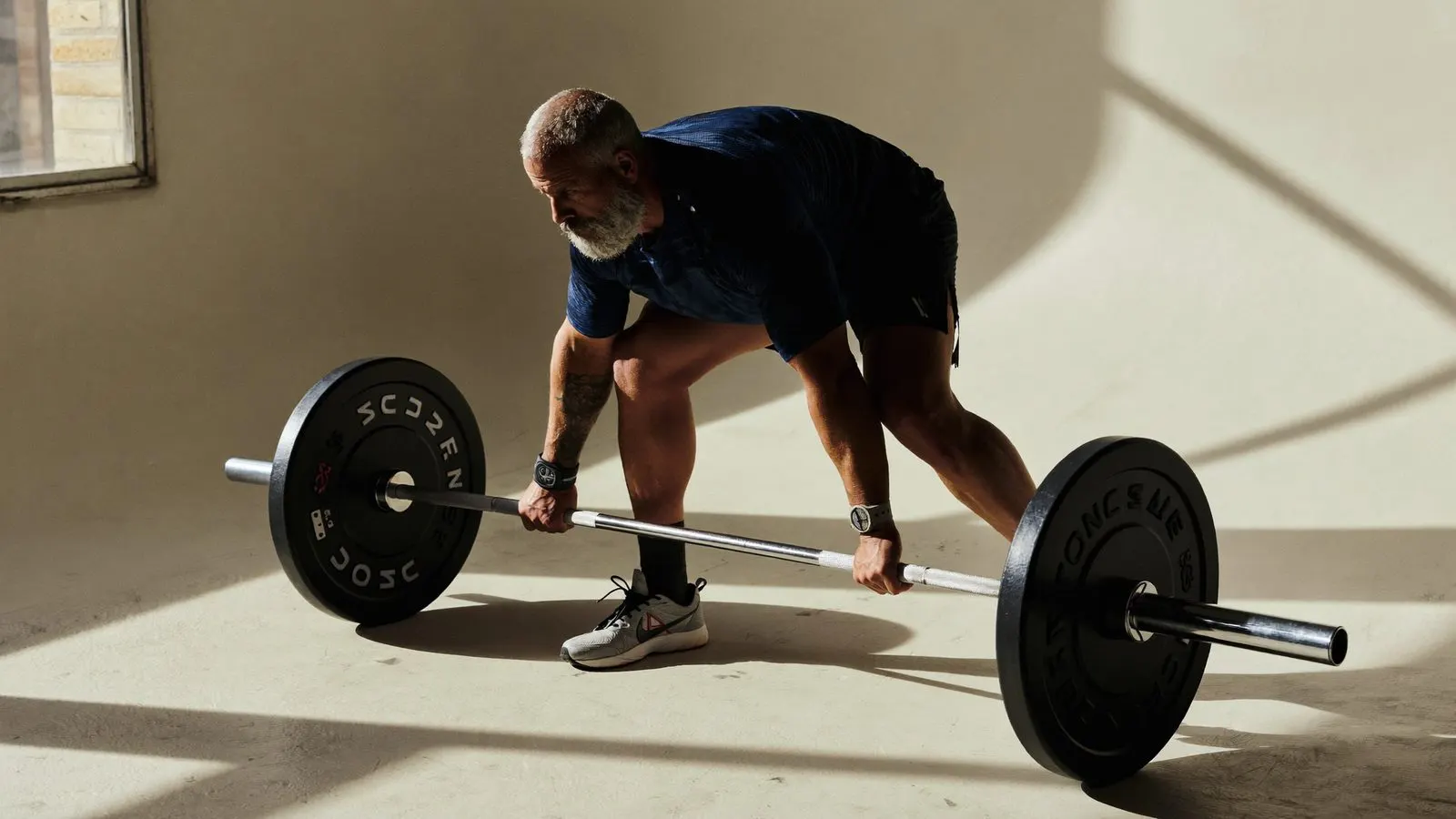
Rebuild the engine. Resistance training 2 to 3 times per week, with progressive loads, is the only intervention that restores the lean mass driving the decline. The direct calorie cost of holding muscle is modest, a kilo of muscle burns perhaps 10 to 13 kcal/day at rest, but the indirect effects are the point: training sessions themselves burn calories, strength makes daily life more active, and muscle is the organ that disposes of glucose.
Defend the movement floor. Set a daily step number you hit on your worst day, 7,000 to 8,000 for most, and treat it like a meeting. This single habit replaces most of the NEAT that office life confiscated.
Raise protein. 1.6 g or more per kg per day. Protein costs more calories to digest than carbs or fat, around 20 to 30% of its energy, and it protects the muscle you are rebuilding while keeping hunger manageable.
Fix sleep before blaming hormones. Seven hours minimum. The intake creep from chronic short sleep dwarfs most proposed hormonal effects on expenditure.
What this looks like in coaching
Clients in their forties and fifties arrive at the practice convinced their metabolism is broken. The intake interview almost always finds the same three-line story instead: training stopped sometime in their thirties, daily steps are under 5,000, and protein sits near half of target. Their metabolism is fine. Their inputs retired early.
The 12-week opener is unglamorous: two full-body strength sessions per week, a step floor, a 30 to 40 g protein anchor at breakfast, and a fixed bedtime. No deficit in the first month; we let training and movement re-expand expenditure before tightening food.
The typical result by week twelve is two to three kilograms down, visibly better waist measurements, and strength numbers a decade younger. Not because we sped up a slowing furnace, but because we reopened the two valves that age quietly closes: muscle and movement. The decline was never the metabolism. It was the inputs, and inputs take coaching, not miracles.
This article is educational and is not medical advice. Diego Botezelli is a researcher and coach, not a physician — he does not diagnose, treat, or prescribe. Talk to your doctor before changing medication, supplements, or training, especially if you have a health condition or take prescription drugs.
Want this applied to your own physiology?
The same evidence standard behind this article runs through every program I write, in person in Port Coquitlam or online.