Fish Oil: Do You Need a Supplement or Just Fish?
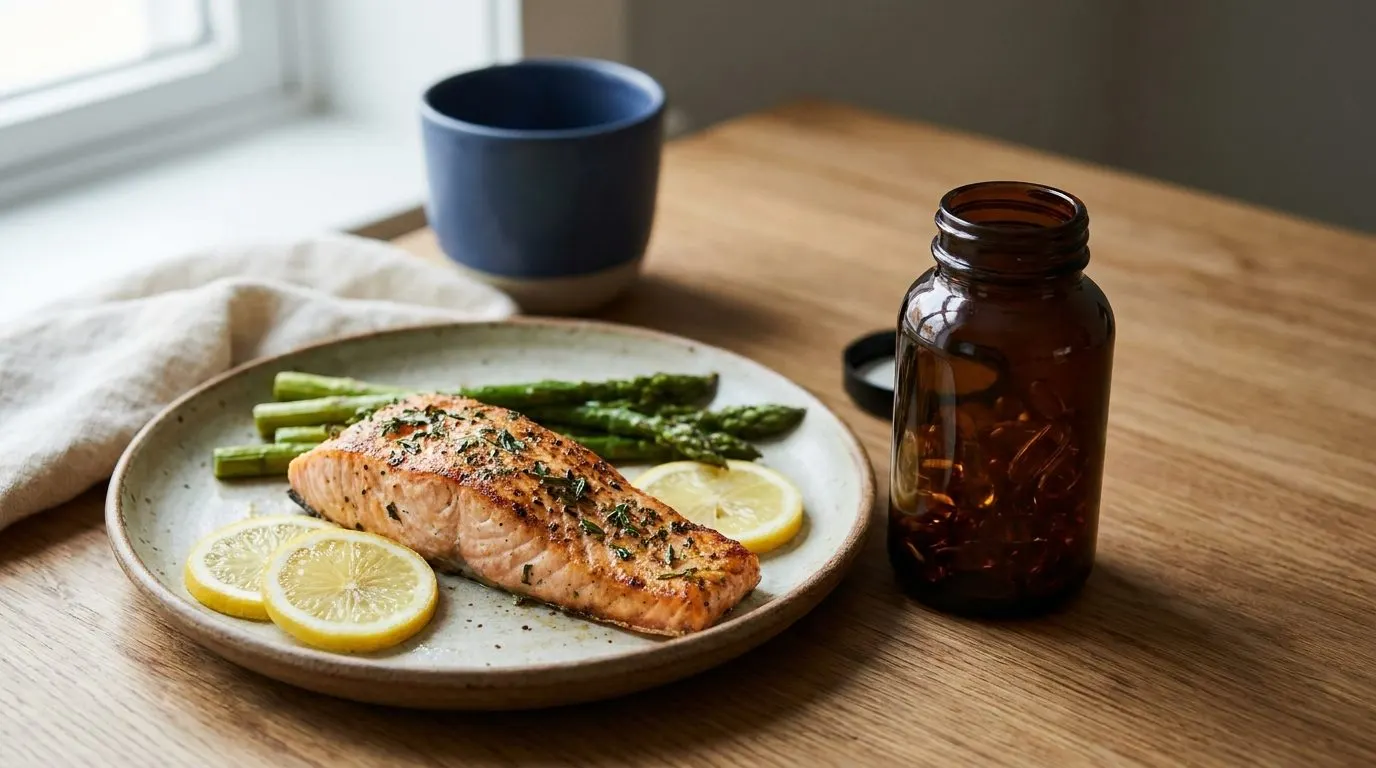
Eating fatty fish twice a week tracks with lower cardiovascular mortality across large populations. Taking fish oil capsules on top of a decent diet does much less than the supplement aisle implies. And at higher supplemental doses, there is a real signal that should make you pause before defaulting to a daily capsule.
The omega-3 fats EPA and DHA do legitimate work in the body, supporting cell membranes, blunting inflammation, and lowering triglycerides. The question is never whether omega-3s matter. It is whether you are better off getting them from a plate or a pill.
Food first has the stronger evidence
Population studies consistently associate regular fish intake with better heart outcomes. The catch is that fish comes packaged with protein, selenium, vitamin D, and a dietary pattern, while a capsule isolates two fats and hopes for the same effect. When trials gave fish oil to people who already ate reasonably, the added benefit was often small or absent.
There are real indications for supplementing. Very high triglycerides respond to prescription-strength omega-3 doses. People who genuinely do not eat fish, including some on restrictive diets, have a defensible case for a modest supplement. But “I should probably take fish oil” is rarely the same as “I have a reason to take fish oil.”
The atrial fibrillation signal
This is the part the marketing skips. A meta-analysis of large cardiovascular outcome trials found that marine omega-3 supplementation raised the risk of atrial fibrillation, an irregular heart rhythm, by roughly 25%, and the effect was dose-dependent, rising with higher daily amounts (Gencer et al., 2021, Circulation, PMID 34612056). The absolute risk increase was modest, a few percent over years, but it ran the opposite direction from what most people assume a heart supplement does.
The important nuance: this risk showed up at supplemental doses, especially high ones, not from eating fish. Dietary omega-3 intake is not implicated the same way. The signal is specifically about pouring in concentrated capsules, which is exactly the behavior the wellness market encourages.
Quality, oxidation and label claims
If you do supplement, the product itself is a variable people ignore. Fish oil is a fragile, oxidation-prone fat. Capsules that sat in a warm warehouse or on a sunny shelf can go rancid, and rancid oil is not just useless, it delivers oxidized fats you did not want. A fishy burp or a fishy smell on opening the bottle is a warning sign, not a normal feature.
Label accuracy is the other issue. Independent testing has repeatedly found fish oil products containing less EPA and DHA than claimed, and some with measurable oxidation. This is the same theme that runs through the whole supplement aisle. If you have decided you need it, a third-party-tested product stored cool is the version worth buying, not the cheapest tub of softgels.
What this looks like in coaching
My default is food. Two servings a week of salmon, sardines, mackerel, trout, or herring covers the omega-3 case for most people, with none of the AFib concern and a lot of other nutrition along for the ride. I treat that as the goal, not the supplement.
When someone genuinely cannot or will not eat fish, I suggest a modest supplement, around one gram of combined EPA and DHA daily, from a third-party-tested product, and I tell them not to chase megadoses chasing a bigger effect that the data does not support. Anyone with a known arrhythmia, or a strong family history, should raise fish oil with their physician before starting, given the rhythm signal.
I separate two situations that often get blurred. The first is the healthy person taking fish oil “for prevention,” where the added benefit on top of a decent diet is small and the AFib signal at higher doses is a genuine reason for restraint. The second is the person with very high triglycerides, where prescription-strength omega-3, dosed and monitored by a physician, is a legitimate treatment. Those are different conversations, and the supplement aisle markets to the first as if it were the second.
For vegetarians and vegans who want the omega-3 case without fish, I point to algae-based EPA and DHA. It is the original source the fish themselves get it from, it skips the rancidity and contamination concerns of fish oil, and it delivers the same active fats. It costs more, but for someone who has decided they need a supplement and will not eat fish, it is the cleaner option.
The pattern here repeats across this whole category. The nutrient is real. The food beats the pill. And the reflex to supplement “just in case” can quietly carry a cost. Eat the fish. Reach for the bottle only when you have an actual reason.
This article is educational and is not medical advice. Diego Botezelli is a researcher and coach, not a physician — he does not diagnose, treat, or prescribe. Talk to your doctor before changing medication, supplements, or training, especially if you have a health condition or take prescription drugs.
Want this applied to your own physiology?
The same evidence standard behind this article runs through every program I write, in person in Port Coquitlam or online.