Whey vs Plant Protein: What Actually Builds Muscle
The whey-versus-plant debate is mostly settled, and the answer disappoints both camps. When you match the dose for leucine, the two build muscle about equally well. The tub you choose matters far less than whether you hit your daily protein target.
Leucine is the amino acid that flips the switch on muscle protein synthesis. Whey is naturally high in it and digests fast, which is why it became the default. Plant proteins tend to run lower in leucine per gram, which is the real reason for their weaker reputation. The reputation is about the dose, not about being plant-based.
When the playing field is level
A 12-week resistance training trial compared soy and whey supplements matched for leucine in men and women. The result: no significant difference in muscle growth or strength between the groups (Lynch et al., 2020, Nutrients, PMID 32486007). When the leucine was equal, the source did not decide the outcome.
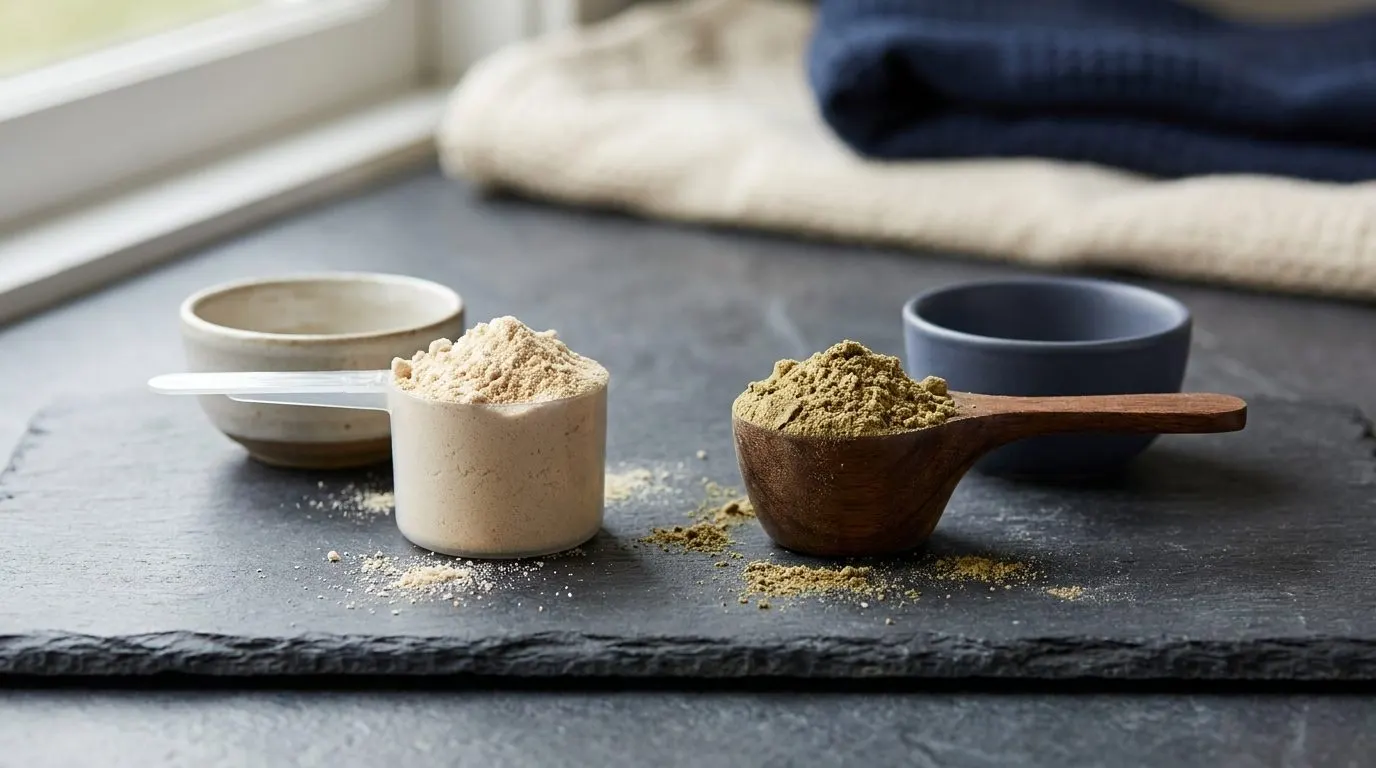
That is the key insight. A well-formulated plant blend, typically pea plus rice to cover the amino acids each one lacks, can match whey if you take slightly more of it to land the same leucine. Stop thinking animal versus plant and start thinking leucine per serving.
Where the source still matters
Two caveats keep this from being a free-for-all.
First, not every plant protein is a smart blend. Collagen is the clearest example of a protein that looks like protein on a label but performs badly for muscle. In a 10-week training study, whey beat leucine-matched collagen peptides for building muscle thickness (Oikawa et al., 2022, International Journal of Sport Nutrition and Exercise Metabolism, PMID 35042187). Collagen is low in the aminos that drive growth. Counting it toward your protein target is a common and costly error.
Second, cost and digestion are real tiebreakers. Whey usually wins on cost per gram of leucine. But a meaningful number of people do not tolerate whey well, and for them a quality plant blend is the better daily habit because they will actually drink it.
Digestion speed and total daily intake
One more claim deserves a clear answer: whey’s faster absorption. It is true that whey raises blood amino acids more quickly than most plant proteins, which is why it produces a sharper short-term spike in muscle protein synthesis. For most people, this matters far less than it sounds.
The reason is that total daily protein dominates the outcome. Whether a given meal’s aminos arrive a bit faster or slower washes out across a day of eating, especially when you are hitting your target across three or four meals. The fast-versus-slow distinction is a detail for a narrow case, such as immediately around training. The protein you eat over the whole day is the thing that builds and preserves muscle, and both whey and a good plant blend get you there.
What this looks like in coaching
I pick the powder by the person, not the ideology. The questions are simple. Does it sit well in your stomach? Does it fit your budget per serving? Does it carry a third-party testing seal like Informed Sport or NSF, given that protein powders are a frequent target for contamination and label inflation?
For most omnivores I default to whey isolate for the cost and the easy leucine. For people who are dairy-sensitive, vegan, or just prefer plants, I recommend a pea-rice blend and tell them to take a slightly larger scoop to match the leucine, roughly 30 to 40 grams of a plant blend against 25 to 30 of whey.
I also warn people off single-source plant proteins for their main supplement. Pea alone or rice alone each lacks part of the amino acid profile, which is why the good products blend them. A blend covers the gaps the way mixing beans and rice does in whole-food cooking. If the label says only one plant source, I treat it as a weaker choice unless it is clearly leucine-fortified.
One practical detail that decides adherence: texture and taste differ a lot between plant and whey. Plant proteins are often grittier and earthier, which some people dislike enough to stop using them. I have clients buy a single-serving sample or a small tub first, before committing to a five-pound bag of something they will not drink. The best protein powder, again, is the one that actually gets consumed every day toward the daily target.
Then I tell them to stop overthinking it. Powder is a convenience tool to help you reach 1.6 to 2.2 grams of protein per kilogram of body weight on busy days. The brand on the tub is a rounding error next to whether you hit that number every day. Whole-food protein still comes first. The shake fills the gap.
This article is educational and is not medical advice. Diego Botezelli is a researcher and coach, not a physician — he does not diagnose, treat, or prescribe. Talk to your doctor before changing medication, supplements, or training, especially if you have a health condition or take prescription drugs.
Want this applied to your own physiology?
The same evidence standard behind this article runs through every program I write, in person in Port Coquitlam or online.