Sleepy and Hungry
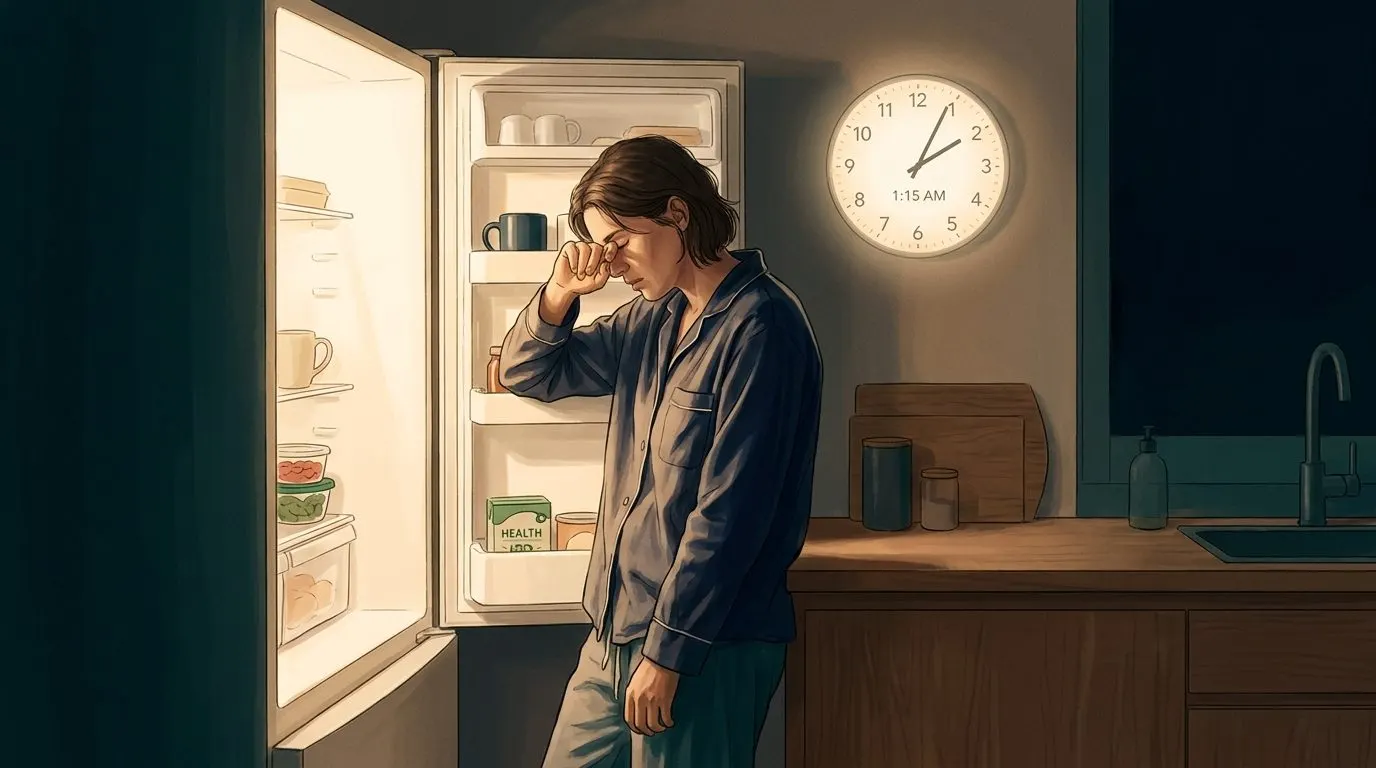
You know the feeling. You slept four hours, dragged yourself through the morning, and by 2 p.m. you’d cheerfully fight a stranger for a cookie. Then comes the night, and the kitchen starts calling your name.
That isn’t a character flaw. That’s chemistry. And once you understand it, you’ll stop blaming yourself for it.
The two hunger hormones
Your appetite is largely run by two hormones playing tug-of-war.
- Ghrelin is the “I’m hungry, feed me” hormone. It comes mostly from your stomach and tells your brain to go find food.
- Leptin is the “I’m full, we’re good” hormone. It comes from your fat cells and tells your brain to put the fork down.
In a well-slept body, these two stay balanced. You get hungry, you eat, you feel satisfied, you stop. Simple.
Now wreck your sleep. The whole system tilts. Ghrelin goes up — even a single bad night can nudge it higher and leave you reporting more hunger — and over a couple of short nights, leptin drops too. So the “feed me” signal gets louder while the “we’re good” signal goes quiet.
Read that again, because it’s the whole game: short sleep makes you hungrier and makes it harder to feel full. You’re not imagining it. Your dials got turned.
The cravings, not just the calories
It gets sneakier. Sleep-deprived, your brain doesn’t just want more food — it wants the worst food.
When you’re running on no sleep, the brain’s reward system lights up harder for calorie-dense treats. Chips, sweets, the takeaway menu. Meanwhile the sensible part of your brain — the one that says “have the salad” — is foggy and underpowered. So the cravings get stronger and your defenses get weaker at the exact same time. Brutal combo.
This is the engine behind the late-night-snack spiral. Bad night, ravenous day, you cave in the evening, you eat too much too late, that messes up tonight’s sleep, and tomorrow the dial sits even further toward “feed me.” Round and round it goes.
Here’s the punchline that surprises everyone: you can genuinely gain weight just from sleeping badly. Same person, same willpower, same fridge — but short on sleep, they eat more, crave worse, and feel hungrier all day. The deck is stacked before they make a single “decision.”
So if you’ve been white-knuckling your way through evening cravings on five hours of sleep, the fix might not be more discipline. It might be more pillow.
The takeaway: short sleep cranks ghrelin up and pushes leptin down while sharpening junk-food cravings — you can gain weight just from sleeping badly, no willpower failure required.
Hunger hormones are only the start. Next, the bigger hormonal picture — and how one bad week measurably moves the needle.
BTZ Academy lessons are educational, not medical advice. Talk to your physician before changing medication, supplements, or training.