Zinc: The Repair Foreman
If your body were a construction site, zinc would be the foreman who shows up for everything: immune defense, wound healing, hormone production, and the steady upkeep of dozens of enzymes. It doesn’t do one flashy thing. It does a hundred small essential ones.
When you’re short, the site gets sloppy — cuts heal slower, you catch every cold going around, and your sense of taste and smell can fade.
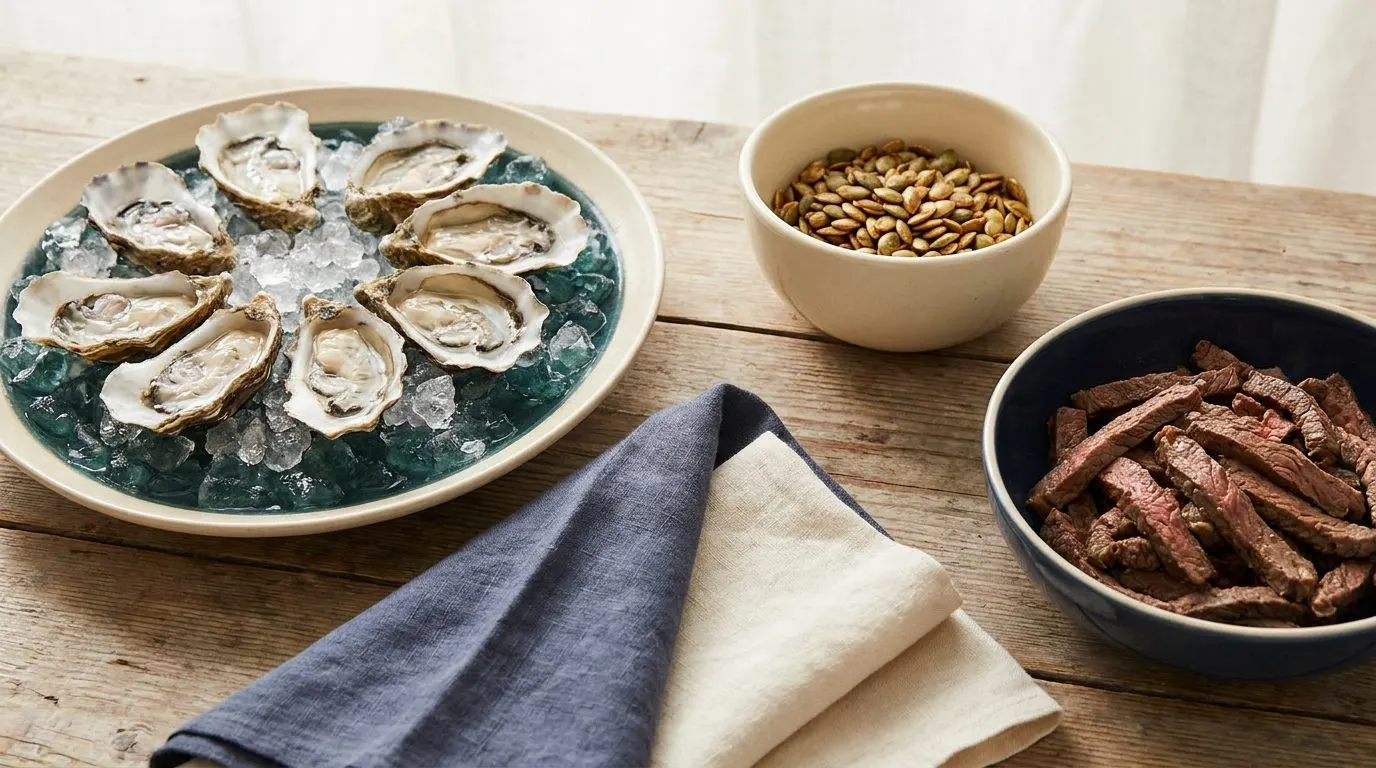
Yes, the oyster thing is real, sort of. Oysters are the richest food source of zinc on the planet, and zinc supports testosterone production — which is where the old reputation comes from. But before you book a seafood tower: zinc only helps testosterone if you were genuinely low to begin with. Topping up a normal level doesn’t turn you into a superhero. It just makes for an expensive dinner.
Where to get it
You don’t need oysters. Zinc is all over the everyday plate:
- Meat, poultry, and shellfish — the easiest, best-absorbed sources.
- Pumpkin seeds, cashews, and chickpeas for the plant side.
- Dairy and whole grains chip in too.
Two practical rules
Timing. If you take a zinc supplement, take it with a small meal that has some protein. On an empty stomach it can make you queasy — a lot of people learn this the hard way.
The copper catch. This is the one most people don’t know. Zinc and copper compete for the same absorption doorway in your gut. Take high-dose zinc for months on end and you can quietly starve your body of copper — which, ironically, weakens the very immune system you were trying to boost.
So keep it sensible. The safe upper limit for adults is around 40 mg a day from supplements. Past that, long-term, you’re playing tug-of-war with your own copper. Many decent zinc supplements include a little copper for exactly this reason — a smart touch if you’re taking it regularly.
For most people eating a normal varied diet, food covers zinc comfortably. Save the supplement for short stints — like the first day or two of a cold — rather than as a forever pill.
The takeaway: get zinc from food first, take supplements with a protein snack, and don’t megadose for months without a little copper alongside it.
Next lesson: calcium — the bone mineral that also runs your muscles, and why lifting weights is its best friend.
BTZ Academy lessons are educational, not medical advice. Talk to your physician before changing medication, supplements, or training.