Cottage Cheese Is Back: A PhD's Take on the Trend
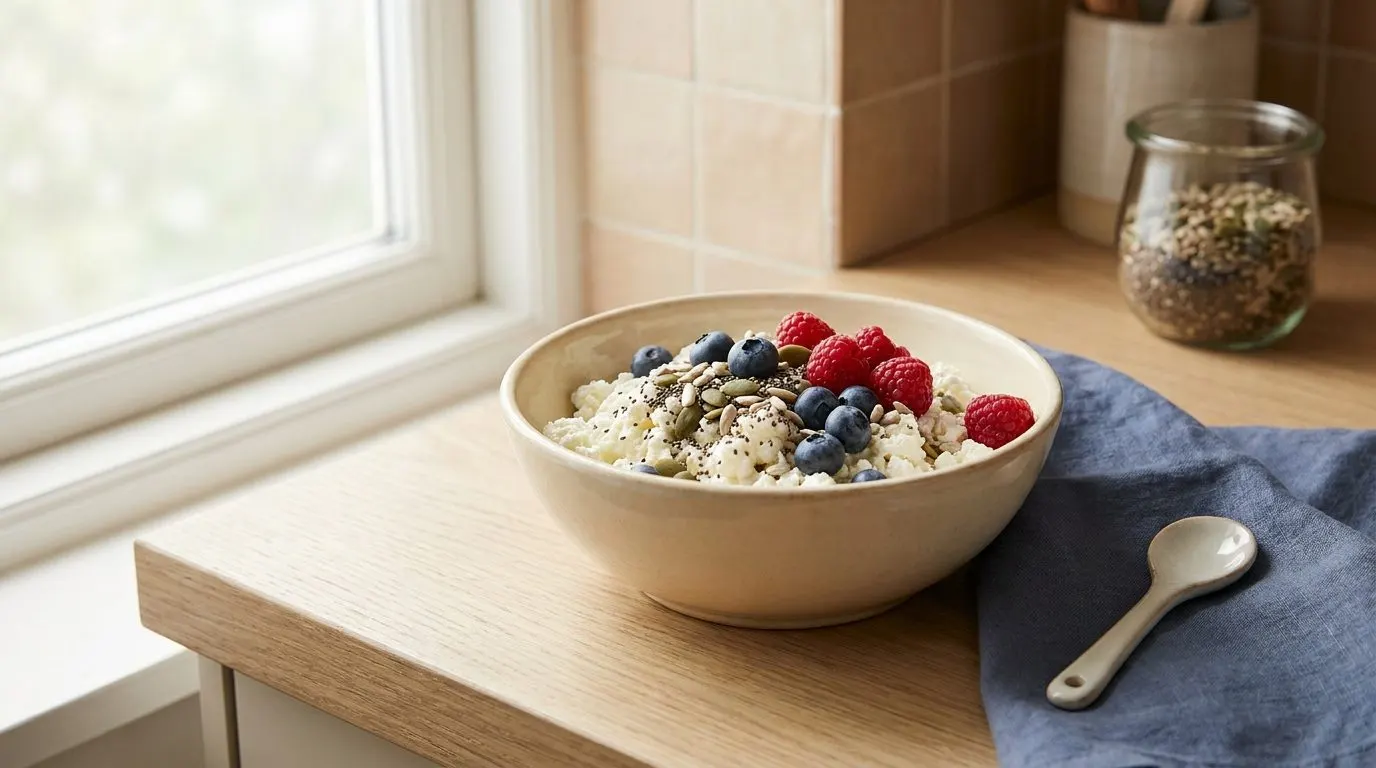
Cottage cheese spent a decade as a punchline, the beige food on a dieter’s sad plate. Then it became one of the most-searched foods of 2025, turned into viral bowls, flatbreads and ice creams. This is a trend that deserves the comeback, because the food earns it on the numbers.
Cottage cheese delivers roughly 11 to 14 grams of protein per 100 grams, most of it casein. It is cheap, shelf-stable in the fridge for a reasonable stretch, and it absorbs whatever flavor you throw at it, which is why it works as both a savory base and a dessert.
Why casein is the interesting part
The protein in cottage cheese is mostly casein, which digests slowly and releases amino acids over hours rather than minutes. That slow drip is useful, and it is best documented around sleep. A randomized trial had trained men consume 40 grams of casein before bed after evening resistance exercise, and overnight muscle protein synthesis rates were about 22% higher than with a placebo (Res et al., 2012, Medicine & Science in Sports & Exercise, PMID 22330017).
That study used a casein supplement, not a tub of cottage cheese, so I won’t overstate it. But it explains why a slow-digesting, casein-rich food makes a sensible evening protein source, and why a bowl of cottage cheese is a reasonable last meal of the day.
How it stacks against the alternatives
Greek yogurt and skyr are the obvious comparisons, and all three are excellent. Greek yogurt runs slightly higher in protein per calorie in many brands and is lower in sodium. Skyr is similar. Cottage cheese wins on versatility and texture for cooking, and it tends to be cheaper.
The one flag is sodium. Cottage cheese can carry a meaningful salt load, and for anyone managing blood pressure, that matters. Low-sodium versions exist, and they solve the problem without losing the protein.
What this looks like in coaching
I treat cottage cheese as a protein utility player. It slots into the parts of the day where clients struggle to hit their anchor. A half-cup stirred into eggs at breakfast adds protein without adding much volume. A bowl with berries and a little honey replaces a low-protein dessert. Blended, it thickens a savory dip or a high-protein flatbread.
For fat loss, the math is what matters. A standard serving lands around 14 to 20 grams of protein for very few calories, which makes it one of the most efficient ways to push toward a daily target without crowding the plate. I steer hypertensive clients to the low-sodium version and otherwise let them use it freely.
The viral bowls are fine, but the trend’s real value is simpler than the recipes. Cottage cheese is a cheap, high-protein, slow-digesting food that fits almost any plan. It was always good. It just needed better marketing.
This article is educational and is not medical advice. Diego Botezelli is a researcher and coach, not a physician — he does not diagnose, treat, or prescribe. Talk to your doctor before changing medication, supplements, or training, especially if you have a health condition or take prescription drugs.
Want this applied to your own physiology?
The same evidence standard behind this article runs through every program I write, in person in Port Coquitlam or online.