Ultra-Processed Foods: The Real Weight-Gain Driver?
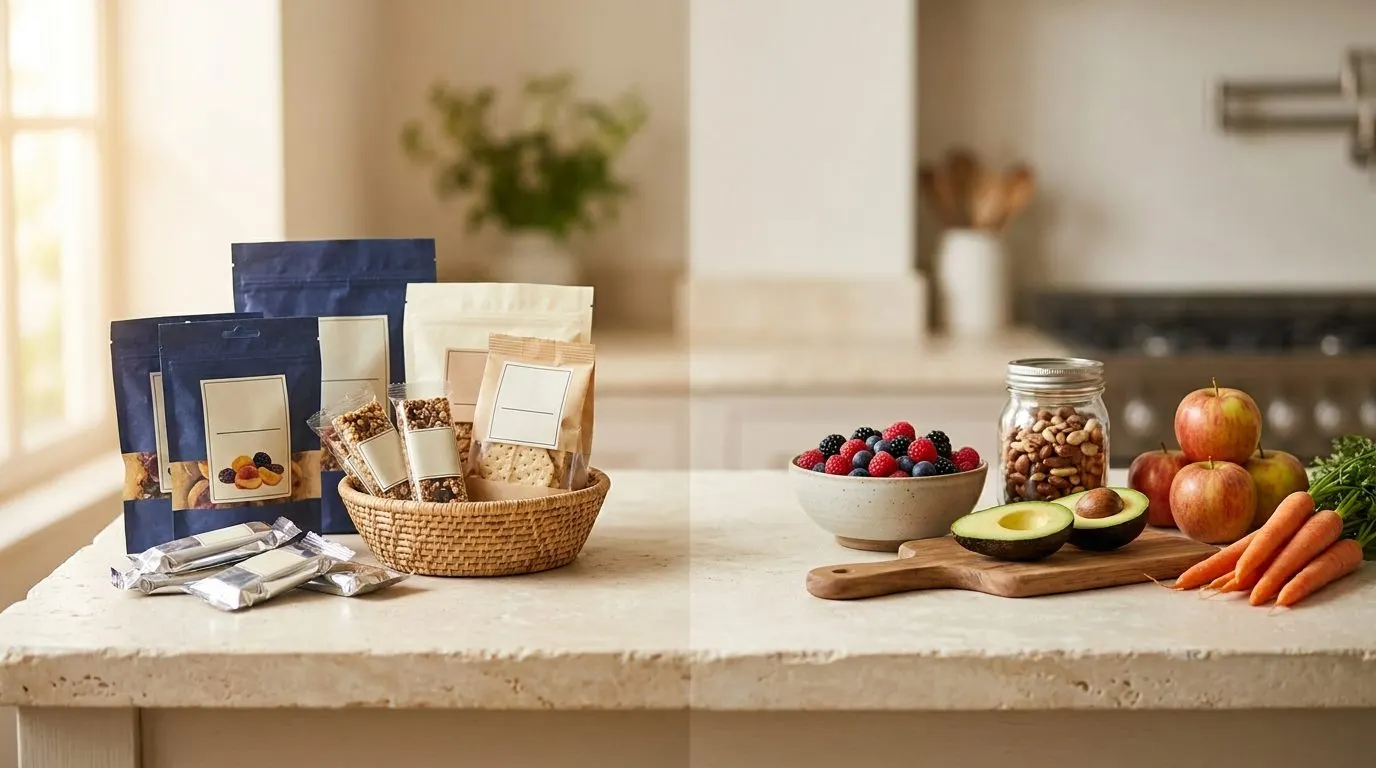
Ultra-processed foods supply more than half of the calories the average North American eats in a day. That single statistic explains a lot of why the “eat less, move more” advice keeps failing in practice. The problem isn’t that people lack willpower. It’s that the food itself is engineered to be overeaten.
The strongest evidence here comes from a controlled trial that actually fed people, rather than asking them to remember what they ate.
The Hall trial
Researchers admitted adults to a metabolic ward and fed them two diets in random order: one ultra-processed, one minimally processed. The two diets were matched for calories, sugar, fat, fiber and macronutrients on offer, and people could eat as much or as little as they wanted. On the ultra-processed diet, they ate about 508 more calories per day without trying, and they gained weight. On the unprocessed diet, they ate less and lost weight (Hall et al., 2019, Cell Metabolism, PMID 31105044).
Same nutrients on paper, 500-calorie difference in behavior. The mechanism is passive overconsumption. Ultra-processed foods are soft, calorie-dense, fast to eat and weak on satiety, so people get more calories in before the body signals fullness. There is no need to invoke a mystery toxin. The food is simply easy to overeat.
The trial was small, around 20 people, and ran for a few weeks. But it is a tightly controlled test, and it isolates processing as the variable in a way observational studies cannot.
Not all processing is equal
This is where the conversation usually goes wrong. The “ultra-processed” category is broad enough to include both a fluorescent snack cake and a plain high-protein Greek yogurt. Whey protein powder is technically ultra-processed. So is many a fortified, low-sugar protein bar.
Some of those processed foods are genuinely useful for the goals most of my clients have. A protein yogurt or a whey shake helps hit a protein target that whole foods alone might miss. Lumping it in with chips and soda under one scary label is not helpful.
The better frame is satiety per calorie. Rank foods by how full they keep you for the calories they cost, not by how many syllables are on the ingredient list. A protein yogurt scores well. A bag of crackers scores badly. Both are processed.
What this looks like in coaching
I do not ask clients to eliminate ultra-processed food, because that fails fast and breeds guilt. I ask them to change the ratio.
The practical move is to make whole, high-satiety foods the base of the plate at most meals, then let processed foods fill specific, useful roles. Protein powder and protein yogurt stay, because they earn their place. The hyper-palatable, low-satiety snacks get pushed to the edges, not banned, because banning a food is the surest way to overeat it later.
The Hall trial’s lesson is liberating once you stop reading it as moral failure. If a category of food quietly adds 500 calories a day, the fix is to lean on foods that fill you up instead. You are not weak. You were eating food designed to beat your fullness signals. Change the food, and the deficit gets easier without a single ounce of extra willpower.
This article is educational and is not medical advice. Diego Botezelli is a researcher and coach, not a physician — he does not diagnose, treat, or prescribe. Talk to your doctor before changing medication, supplements, or training, especially if you have a health condition or take prescription drugs.
Want this applied to your own physiology?
The same evidence standard behind this article runs through every program I write, in person in Port Coquitlam or online.