Do Artificial Sweeteners Stall Fat Loss?
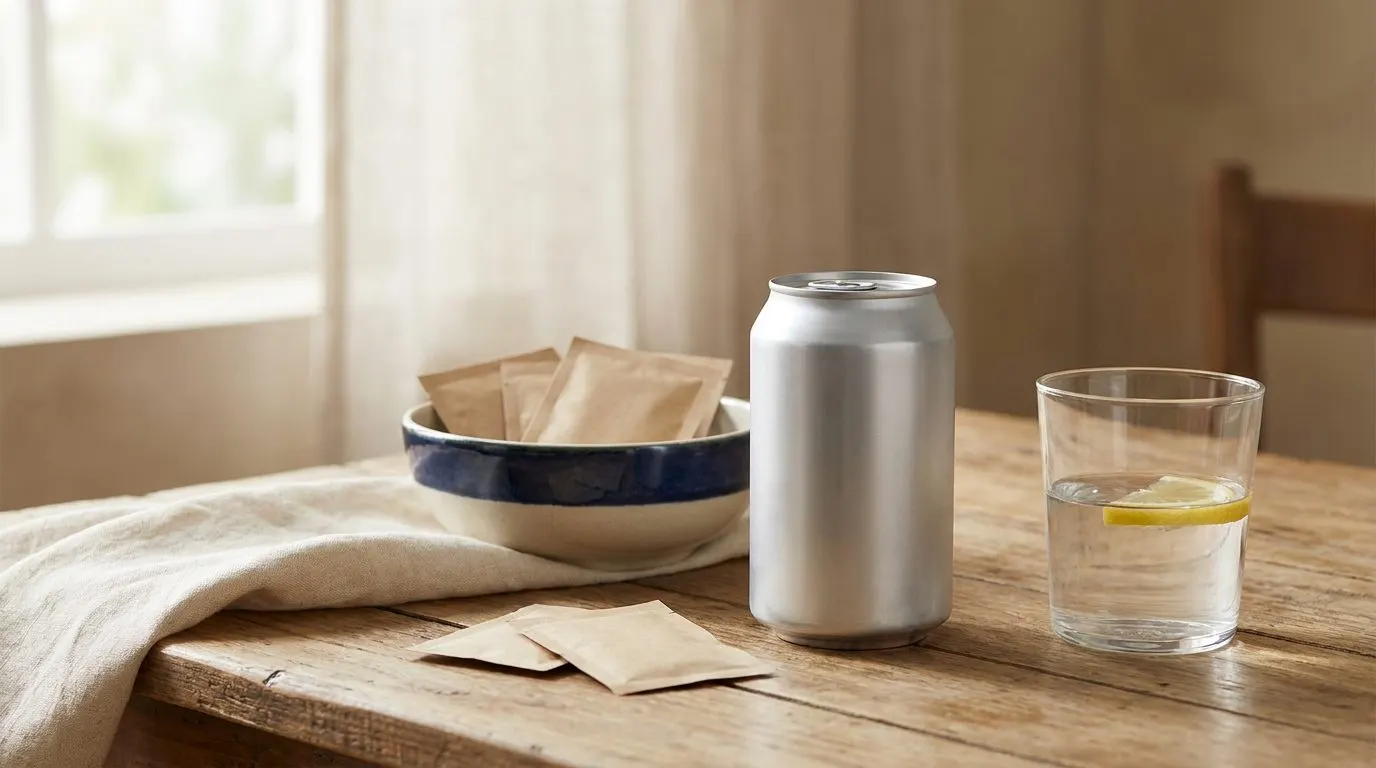
Diet soda and aspartame sit near the top of nutrition’s anxiety list, and every WHO or IARC headline sends searches spiking again. The fear comes in two flavors: that artificial sweeteners secretly stall fat loss, and that they wreck your gut or insulin response. The controlled evidence is calmer than the headlines.
Start with the question people actually care about: do they help or hurt weight loss?
What the trials show on weight
A systematic review and meta-analysis of randomized controlled trials found that replacing sugar with non-nutritive sweeteners modestly reduced body weight and BMI, with no significant adverse effect on weight in the trial data (Laviada-Molina et al., 2020, Obesity Reviews, PMID 32216045). When people swap a sugary drink for a diet version, they tend to take in fewer calories, and the scale reflects it.
This is the part the scary coverage leaves out. The alarming associations between diet soda and weight gain come almost entirely from observational studies, and they are a textbook case of reverse causation. People who are already gaining weight or managing diabetes switch to diet drinks, so diet soda gets statistically linked to the very problem it was chosen to fight. Randomized trials, where the timeline is clear, point the other way.
The gut and insulin worries
The gut microbiome and insulin claims usually trace back to rodent studies using enormous doses, or to small human studies that don’t replicate cleanly. At the intakes a normal person consumes, the effects on gut bacteria and insulin response are minor and inconsistent. Some sweeteners show small signals in some people; none of it adds up to a reason for a healthy adult to fear a diet drink.
That is not the same as calling these compounds health foods. They are not. The point is narrower: at human intakes, they do not appear to stall fat loss or meaningfully damage metabolic health, and the trial-level weight data is mildly favorable.
The honest framing
A diet soda that stops you from eating a 400-calorie snack is a net win for the deficit. A diet soda that becomes a habit you build other cravings around is less useful. The sweetener isn’t the lever; the calories it displaces are.
Water remains the default beverage, for cost, for hydration, and because relying on intense sweetness all day can keep the taste for sweet things loud. But “default” does not mean “only allowed.”
What this looks like in coaching
When a client is cutting and struggling with a sweet tooth, I treat diet drinks and sweeteners as tools, not sins. A diet soda in the afternoon that heads off a binge is doing real work. A sugar-free dessert that keeps someone in a deficit they would otherwise abandon is a win, not a compromise.
I set water as the base and let sweeteners fill the gaps that would otherwise be filled by sugar. If a client genuinely feels better cutting them out, that’s fine too, because the deficit is what matters and the beverage is a detail. What I will not do is let someone blame a stalled diet on aspartame when the actual cause, almost every time, is the calories on the plate. The sweetener is the easiest thing to fear and the least likely culprit.
This article is educational and is not medical advice. Diego Botezelli is a researcher and coach, not a physician — he does not diagnose, treat, or prescribe. Talk to your doctor before changing medication, supplements, or training, especially if you have a health condition or take prescription drugs.
Want this applied to your own physiology?
The same evidence standard behind this article runs through every program I write, in person in Port Coquitlam or online.