Fiber Supplements vs Food: A Psyllium Reality Check
About 95% of adults in North America fall short of the daily fiber target, and the average intake sits near 16 grams a day against a recommendation closer to 28 to 34. That gap is real, and the fibermaxxing trend has at least pointed people at a genuine problem. The question is whether a scoop of powder fixes it.
Psyllium is the one fiber supplement that has earned its reputation in controlled trials. It is a soluble, gel-forming fiber, and the gel is what does the work.
Where psyllium genuinely helps
A 2018 meta-analysis of randomized trials found that a median dose of about 10 grams of psyllium per day lowered LDL cholesterol by roughly 0.33 mmol/L, along with reductions in non-HDL cholesterol and apolipoprotein B (Jovanovski et al., 2018, American Journal of Clinical Nutrition, PMID 30239559). That is a modest but reliable drop, and it stacks on top of diet and statins rather than competing with them.
The same gel slows gastric emptying, which blunts the post-meal glucose rise and adds a layer of satiety. For someone holding a deficit, that satiety is worth something. Psyllium is one of the few supplements I will actively suggest during a fat-loss phase, because it does a job food sometimes can’t squeeze in.
Where food still wins
A supplement gives you one fiber from one plant. Your gut bacteria want variety. The strongest mortality data we have is tied to total dietary fiber from whole foods, not isolated powders. Reynolds and colleagues, in a series of systematic reviews and meta-analyses, found that higher fiber intake was associated with a 15 to 30% lower risk of all-cause and cardiovascular mortality, with the benefit climbing across a range of roughly 25 to 29 grams per day (Reynolds et al., 2019, The Lancet, PMID 30638909).
That signal comes from beans, oats, fruit, vegetables and whole grains eaten as food. A psyllium scoop cannot reproduce the spread of fermentable fibers, resistant starch and polyphenols that come bundled in a varied plant diet. The honest read is that observational data carries confounders, but the direction is consistent and the mechanism is plausible.
The mistake that ruins it
People hear the number and double their fiber overnight. The result is bloating, gas and cramping, and they quit by the end of the week. Gut bacteria adapt slowly. Water matters too, because psyllium without enough fluid is just a dense gel sitting in your gut.
Ramp over three to four weeks. Add five grams, hold for several days, then add five more. Drink water with every dose.
What this looks like in coaching
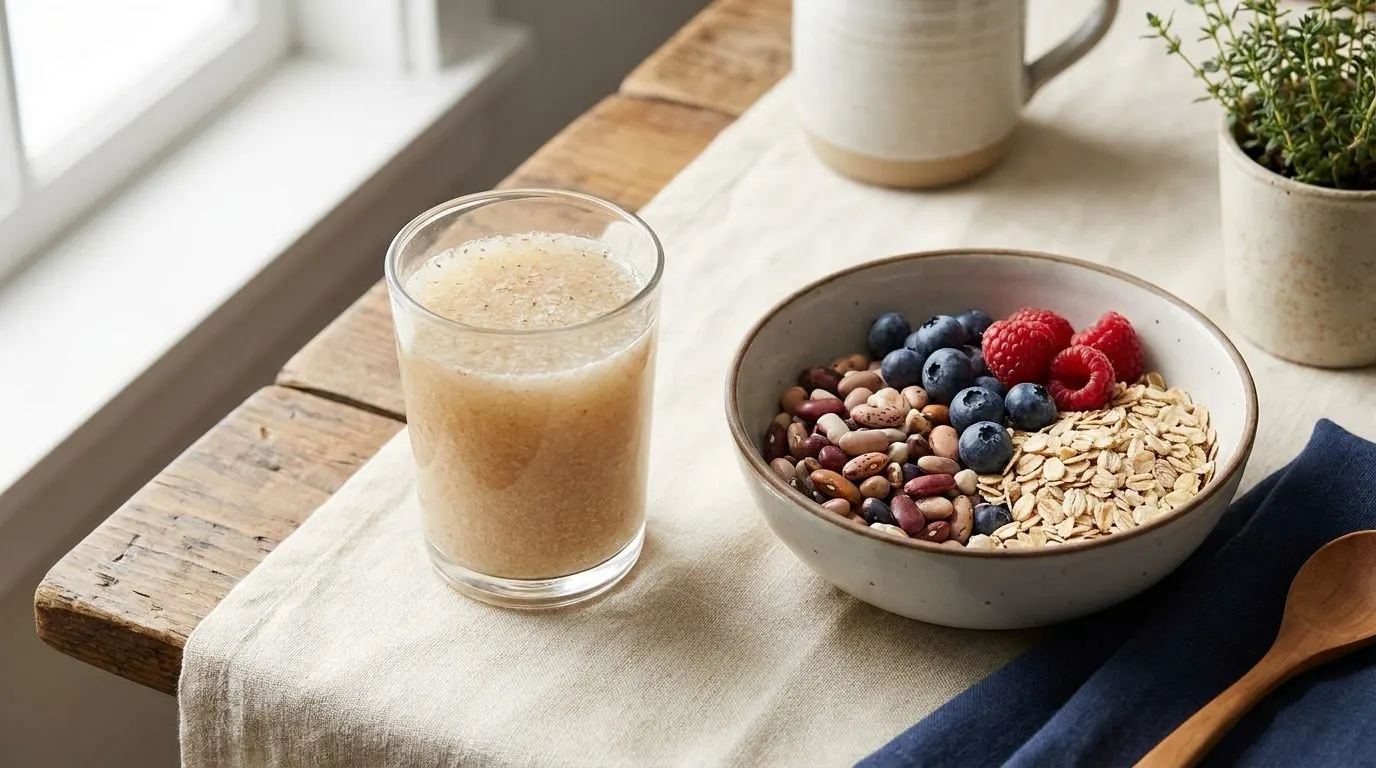
For clients who under-eat fiber, the order is food first, supplement second. I want most of the fiber coming from a rotating set of plants across the week, because that is what the mortality and microbiome data reward. Beans, berries, oats, and a vegetable at two meals will move most people from 16 grams toward the high twenties without any powder.
Psyllium then fills the gap. A typical add is 5 grams once or twice a day, taken with a full glass of water, climbing slowly. I lean on it most during aggressive fat-loss blocks, where appetite is high and total food volume is low, because the satiety and the LDL effect both earn their place there.
Fiber is one of the rare cases where the trend and the evidence point the same way. The catch is that the powder is the backup, not the plan. Build the plate first.
This article is educational and is not medical advice. Diego Botezelli is a researcher and coach, not a physician — he does not diagnose, treat, or prescribe. Talk to your doctor before changing medication, supplements, or training, especially if you have a health condition or take prescription drugs.
Want this applied to your own physiology?
The same evidence standard behind this article runs through every program I write, in person in Port Coquitlam or online.