Fibermaxxing: How Much Fiber Is Enough (or Too Much)?
Most nutrition trends are a step backward dressed as a breakthrough. Fibermaxxing is one of the rare ones worth keeping. The reason is unglamorous: the average adult eats around 16 grams of fiber a day, and roughly 95% fall short of the recommended intake. A trend that nudges people toward more plants is solving an actual deficit.
The benefit isn’t hypothetical. Reynolds and colleagues, in a major series of systematic reviews and meta-analyses, found that higher fiber intake was associated with a 15 to 30% lower risk of all-cause and cardiovascular mortality, with the strongest signal in the range of about 25 to 29 grams per day (Reynolds et al., 2019, The Lancet, PMID 30638909). Higher fiber also tracks with lower body weight and better glycemic control, partly because fiber adds bulk and slows digestion, which makes a calorie deficit easier to hold.
How much is enough
The practical target sits around 28 to 34 grams a day for most adults, depending on body size and total calories. Going much above 40 to 50 grams rarely adds benefit and starts to cause problems: bloating, gas, and in some people, reduced absorption of certain minerals. The dose-response curve from the mortality data flattens; it does not keep rewarding you for stacking fiber endlessly.
So fibermaxxing as “eat 30 grams from real plants” is sound. Fibermaxxing as “eat as much fiber as humanly possible” is where the trend tips into self-inflicted misery.
The two failure modes
The first is ramping too fast. People read the headlines and double their fiber overnight, and their gut bacteria, which adapt over weeks, cannot keep up. The result is days of bloating and a quick surrender. Add fiber in increments of about 5 grams every few days, and drink more water as you go.
The second is displacement. Fiber-rich foods are filling, and someone chasing a fiber number can crowd protein off the plate. A breakfast of oats, berries and chia hits the fiber target and leaves you short on the macro that actually protects muscle. Fiber is a supporting player. Protein still leads every meal.
What this looks like in coaching
I build fiber in after protein, not instead of it. Each meal starts with a protein anchor, and then we layer plants around it: beans into a bowl, berries with yogurt, a vegetable at lunch and dinner, oats with the breakfast protein. That structure lands most clients in the high twenties to low thirties without anyone counting grams of fiber.
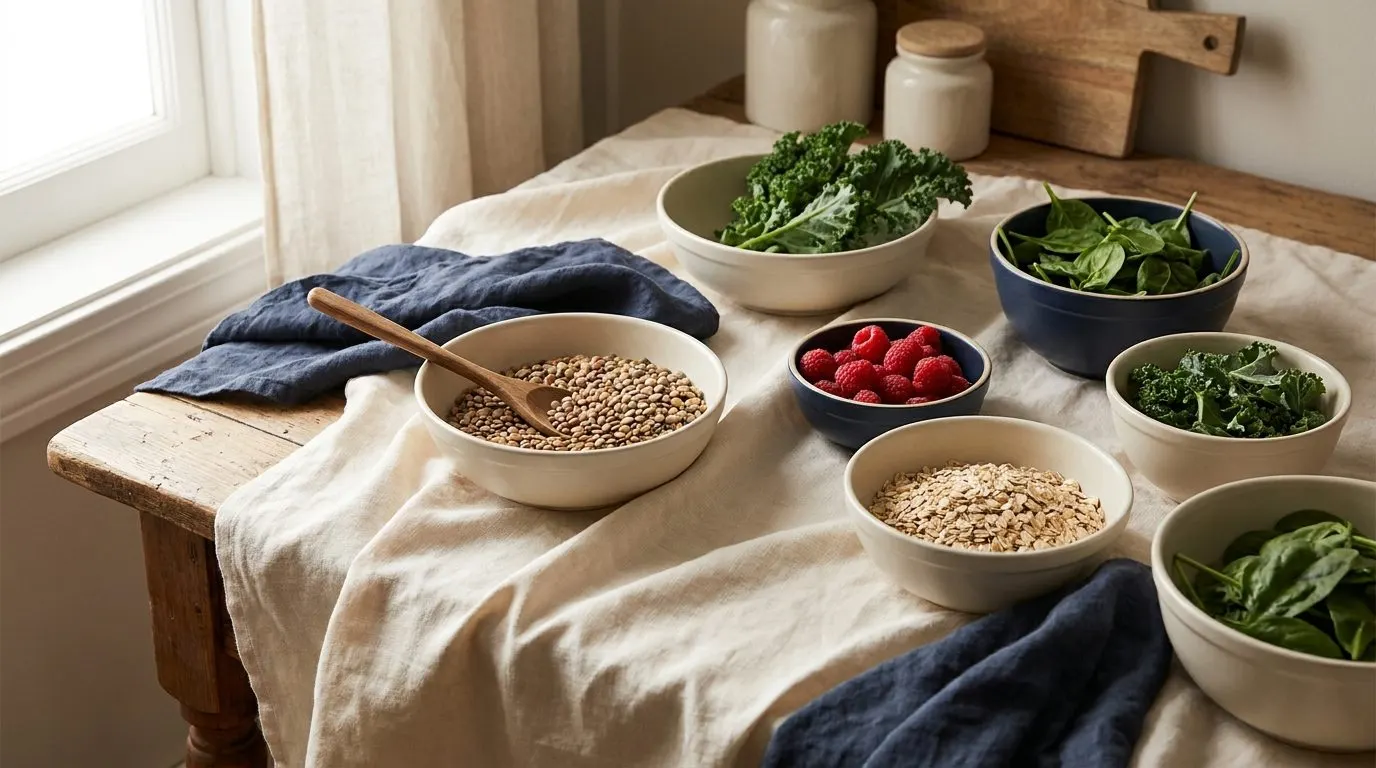
Variety matters more than any single super-food. The mortality and gut-health signal comes from a rotating spread of plants across the week, not from one trendy ingredient eaten daily. Beans one day, lentils the next, a different vegetable at dinner, fruit that changes with the season.
The ramp is deliberate and slow, and water comes with it. Done that way, fibermaxxing stops being a viral stunt and becomes what it should have been all along: eating enough plants, finally.
This article is educational and is not medical advice. Diego Botezelli is a researcher and coach, not a physician — he does not diagnose, treat, or prescribe. Talk to your doctor before changing medication, supplements, or training, especially if you have a health condition or take prescription drugs.
Want this applied to your own physiology?
The same evidence standard behind this article runs through every program I write, in person in Port Coquitlam or online.